
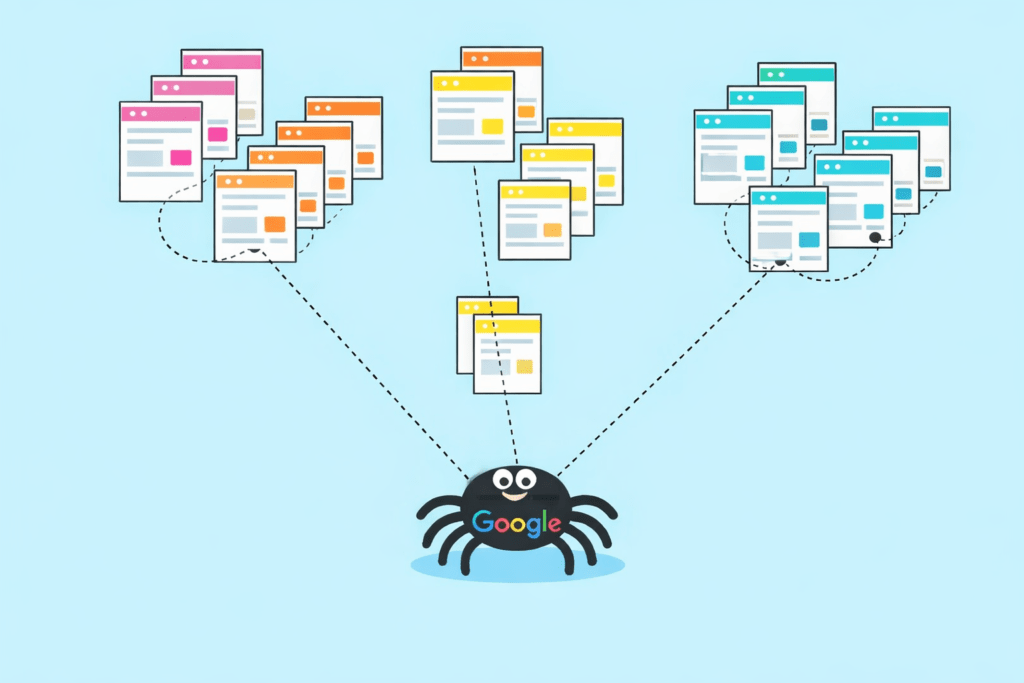
When Google crawls a website, it doesn’t crawl every page every time. Instead, it assigns a limited amount of crawling resources called crawl budget.
For small websites, crawl budget usually isn’t a problem. However, for large websites with hundreds or thousands of pages, inefficient crawling can prevent important pages from being indexed. If search engines spend more time crawling less important or duplicate pages, they may ignore valuable pages that actually matter for rankings.
Optimizing crawl budget ensures search engine bot focus on the pages that drive your organic traffic and SEO performance. Let’s explore how to optimize crawl budget for better SEO.
1. Remove Low Value Pages
Low-value pages are pages that provide little or no value to search users. Examples include thin content pages, duplicate tag pages, or automatically generated URLs.
When these pages exist in large numbers, search engine bots spends valuable crawling resources scanning them instead of important pages like product pages or blog articles.
To fix this issue, identify low quality URLs and either remove them, add a noindex tag, or block them through robots.txt so search engines focus on more valuable pages.
Example
An eCommerce site may generate URLs like:
example.com/men-shoes?color=black
example.com/men-shoes?color=red
example.com/men-shoes?size=9
These parameter pages often contain nearly identical content. Blocking them prevents unnecessary crawling.
2. Improve Website Speed
Website speed directly impacts how efficiently search engines crawl your website. If your server responds slowly, search engine bot reduces its crawl rate to avoid overloading your server.
This means fewer pages are crawled during each visit, which can delay indexing of new or updated content.
Improving site performance allows search engines to crawl more pages within the same crawl budget. You can optimize speed by using a content delivery network (CDN), compressing images, and reducing heavy scripts.
Example
A website loading in 1.5 seconds may allow search engines to crawl hundreds of pages in one session, while a slow website taking 6 seconds per page significantly limits crawl efficiency.
3. Fix Broken Links
Broken links lead to pages that return 404 errors. When search engine bots encounter these URLs repeatedly, they waste crawl resources trying to access pages that no longer exist. If your website contains many broken links, it signals poor site maintenance and reduces crawl efficiency.
Regularly auditing your website and fixing broken links ensures search engines focus on live and valuable pages.
Example
If a deleted page like:
example.com/seo-trend-2021
Search engine crawlers will repeatedly crawl the broken URL when it is internally linked across various pages. Redirecting it or updating the link fixes the issue.
4. Optimize Internal Linking
Internal links help search engines discover and prioritize important pages on your website. Web pages with strong internal linking signals are crawled more frequently. Without proper internal links, search engine bot may struggle to find deep pages within your site structure.
To improve crawl efficiency, ensure every important page is connected through logical internal linking from high-authority pages such as the homepage or category pages.
Example
If a new article titled “Technical SEO Checklist” is linked from the homepage, blog category, and related articles, search engine bot might crawl and index it faster.
5. Maintain a Clean XML Sitemap
An XML sitemap acts as a guide that tells search engines which pages should be crawled and indexed.
If your sitemap contains outdated URLs, redirects, or duplicate pages, search engine bot may waste crawl resources scanning irrelevant URLs.
To improve crawl efficiency, ensure your sitemap includes only indexable, canonical pages that you want to rank in search results.
Example
A clean sitemap should include URLs like:
example.com/seo-guide
example.com/link-building-strategy
but avoid parameter URLs such as:
example.com/page?sort=price
6. Use Robots.txt Strategically
The robots.txt file allows you to control which sections of your website search engines can crawl. If search engines crawl low value pages such as search result pages, cart pages, or admin sections, crawl budget is wasted. Blocking these URLs using robots.txt ensures search engine bot focuses only on pages that is more important for SEO.
Example
User-agent: *
Disallow: /cart/
Disallow: /checkout/
Disallow: /login/
These pages provide no SEO value and can safely be blocked from crawling.
7. Fix Duplicate Content Issues
Duplicate content occurs when multiple URLs contain identical or very similar content.
When search engine bot encounters duplicates, it must crawl multiple versions of the same page before determining which one should rank. This unnecessary crawling wastes resources and can dilute ranking signals. Using proper canonical URLs or redirects helps search engines understand the preferred version of the page. Always use the self-canonical and a canonical tag pointing to the main URL prevents duplicate crawling.
Example
If the same page is accessible via:
example.com/page
example.com/page?ref=twitter
8. Control Faceted Navigation
Faceted navigation allows users to filter products by attributes like size, color, or brand. While useful for users, it often generates thousands of crawlable URL combinations.
Search engines may attempt to crawl every possible filter variation, which can quickly exhaust crawl budget. To prevent this, restrict crawling of parameter URLs and allow indexing only for key category pages.
Example
The below faceted URL structure can create hundreds of similar pages. Blocking these parameters reduces crawl waste.
www.example.com/men-shoes?brand=nike&size=10&color=black
9. Improve Site Architecture
Site architecture determines how easily search engines navigate your website.
If important pages are buried deep within the site, search engine bot may crawl them less frequently or miss them entirely.
A well-structured website ensures important pages are accessible within three clicks from the homepage.
Example
A good structure looks the below. This structure helps search engines discover content quickly.
Home > Blog > SEO > Content Marketing
10. Use Log File Analysis
Log file analysis reveals how search engine bots interact with your website. By analyzing server logs, you can see which pages search engine bot crawls frequently and which pages it ignores. This insight helps identify crawl budget waste and optimize crawling behavior.
Example
You might discover that search engines crawl your old tag pages hundreds of times per week, while new blog posts receive very few crawls. Blocking those tag pages can improve crawl efficiency.
11. Reduce Redirect Chains
Redirect chains occur when multiple redirects happen before reaching the final destination page.
Each redirect requires additional crawling resources, which slows down search engine bot and wastes crawl budget.
Whenever possible, use direct redirects to send users and search engines to the final URL immediately.
Example
Instead of:
Page A → Page B → Page C → Page D
Use:
Page A → Page D
This improves crawl efficiency and page load speed.
12. Fix Soft 404 Pages
Soft 404 errors occur when a page appears empty or irrelevant but still returns a 200 OK status code. Search engines may repeatedly crawl these pages, believing they contain valid content. To prevent this issue, ensure pages that no longer exist return proper 404 or 410 HTTP status codes.
Example
If a product page shows “Product not available” but still returns 200, Google will continue crawling it unnecessarily.
13. Manage Pagination Carefully
Pagination helps organize large lists of content, such as blog archives or product listings. However, poorly implemented pagination can create duplicate or infinite pages that search engines continue crawling.
To manage pagination effectively, ensure clear linking between pages and avoid unnecessary URL parameters. Having proper linking between these pages helps Google crawl them efficiently.
Example
A blog archive may contain:
example.com/blog/page/1
example.com/blog/page/2
example.com/blog/page/3
14. Content Freshness
Websites that update frequently tend to receive more crawl attention from search engines. Fresh content signals that your website is active and worth revisiting. If your website rarely publishes new content, search engine bot may crawl it less often.
Example
A blog publishing two articles per week typically receives more frequent crawling than a site updated only once per month.
15. Remove Orphan Pages
Orphan pages are pages that exist on your website but have no internal links pointing to them. Because search engines rely on links to discover pages, orphan pages are often ignored or rarely crawled. Adding internal links ensures these pages become part of your crawlable site structure.
Example
If a blog post exists but is not linked from any category or article, Google may struggle to discover it.
Linking it from relevant articles or navigation improves crawlability.
Final Thoughts
Crawl budget optimization is often overlooked, but it plays a critical role in how efficiently search engines discover, crawl and index web pages.
When crawl budget is wasted on unimportant pages, important pages may remain undiscovered or unindexed.
By implementing various techniques such as improving site speed, fixing duplicate content, improving internal linking, and improving the sitemap, you are able to ensure that search engines are utilized for the most important pages.
For new websites and content sites, crawl budget optimization can greatly improve the speed of indexing.
Pingback: A Complete Guide to Robots.txt for SEO - Campaign360.io
Pingback: Link-Building Techniques for 2026: The Complete Playbook - Campaign360.io